
Laser Hair Removal vs. Waxing vs. IPL: Which Hair Removal Method Wins?
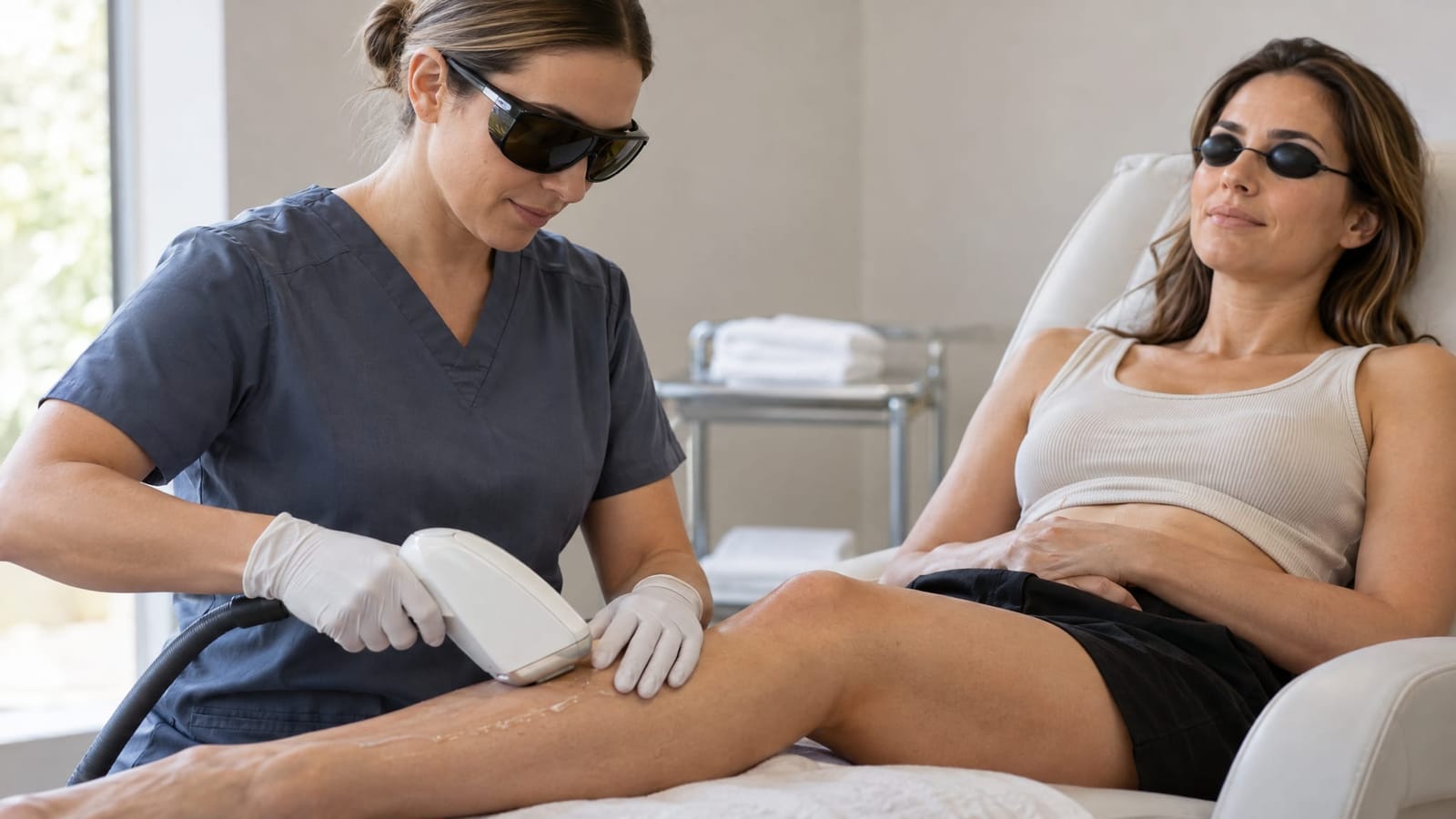
Waxing is the straightforward choice for immediate, temporary hair removal. Laser and intense pulsed light, or IPL, are options for longer-term hair reduction when the device suits the person’s skin tone and hair color. Neither light-based method promises complete, lifelong removal of every hair.
The most useful comparison is not simply which method lasts longest. It is which approach fits the hair being removed, the skin being exposed, the maintenance involved, and the total commitment. Laser is not automatically the best investment for every person, and IPL is not simply another name for laser.
Laser vs. Waxing vs. IPL at a Glance
| Factor | Waxing | Laser | IPL |
|---|---|---|---|
| How it works | Pulls hair out from the root. | Uses a selected wavelength of light to target pigment in hair follicles. | Uses a range of light wavelengths to target pigment in hair follicles. |
| Main goal | Temporary smoothness. | Longer-term reduction in hair growth. | Longer-term reduction in hair growth. |
| Ongoing commitment | Repeat removal as hair grows back. | A series of sessions, with possible maintenance. | Repeated sessions, with maintenance depending on the device and response. |
| Hair-color limitations | Does not depend on hair pigment. | Light, gray, white, and many red hairs are difficult targets. | Has similar pigment-related limitations. |
Lasting Results: Reduction Is Different From Removal
Waxing removes existing hair but does not reliably prevent the follicle from producing another hair. Its benefit is immediate removal, followed by regrowth and another waxing appointment when enough hair is present.
Laser and IPL work differently. Their light energy is absorbed by pigment and converted to heat within the targeted hair structures. Because hairs cycle through different growth stages, one session cannot address every hair equally.
For someone whose priority is less frequent hair removal, that makes light-based methods worth comparing. The realistic goal is reduced growth and less maintenance, not a promise that every hair will disappear permanently. Regrowth can still occur, and hormonal changes can influence future growth.
Skin Tone and Hair Color: Device Selection Matters
The contrast between hair pigment and skin pigment matters for both laser and IPL. Dark, coarse hair generally provides a clearer target than fine, pale hair. Meanwhile, pigment in the surrounding skin can also absorb light energy.
Darker skin is not automatically excluded from laser hair reduction. Certain laser technologies, including long-pulsed Nd:YAG systems, are used for deeper skin tones. The device, settings, cooling, and operator’s experience with the relevant skin tone all matter.
IPL devices differ substantially. An at-home device’s permitted skin-tone range cannot be assumed to apply to another device, and suitability for laser does not automatically mean suitability for IPL.
Waxing avoids the pigment issue, making it an option for blonde, gray, or white hair. However, skin sensitivity and the condition of the skin still matter. Hair color alone does not determine which method is appropriate.
Comfort and Skin Reactions: Different Kinds of Discomfort
Waxing creates a brief pulling sensation as multiple hairs are removed together. Laser and IPL produce sensations of heat or snapping. Body area, hair density, settings, and individual sensitivity affect the experience, so there is no universal pain ranking.
- Waxing: Temporary redness and tenderness can occur. Irritation, ingrown hairs, and lifting of fragile skin are additional concerns.
- Laser: Temporary redness and swelling around follicles can occur. Burns and pigment changes are more consequential risks when equipment or settings are unsuitable.
- IPL: Heat-related irritation, burns, and pigment changes are also relevant risks. Home use does not remove the need for device-specific precautions.
Recent tanning, active irritation, medications, and skin-care products can affect the comparison. Your own medical circumstances require an individualized assessment with a licensed clinician; our medical team can address personal health considerations during consultation.
Cost Over Time: Compare the Maintenance Burden
A single appointment price does not show the full cost of a hair-removal method. Waxing creates a recurring expense. Light-based methods involve repeated sessions or device use before their longer-term maintenance pattern becomes clear.
A useful comparison includes:
- The exact body area covered, rather than a vague description such as “large area.”
- The expected initial course and how follow-up visits are charged.
- Travel time, appointment frequency, or time spent using a home device.
- Maintenance needs rather than an assumption of permanent freedom from hair removal.
When comparing laser hair removal costs in Woodland Hills and Burbank, consistent treatment areas and inclusions make quotes more meaningful.
For occasional removal of a small area, waxing may fit the goal without a longer commitment. For frequent removal of larger areas with suitable hair pigment, reducing future upkeep may matter more than the initial expense. Neither example establishes that one option will cost less for everyone.
Where Stem Cells, Peptides, and Exosomes Fit
Hair-removal methods and cellular-health concepts address different questions. Waxing physically removes hair. Laser and IPL use light and pigment as their working mechanism. Stem cells, peptides, and exosomes are biological subjects, not interchangeable names for those methods.
- Stem cells can self-renew and give rise to specialized cells. Within hair follicles, resident stem cells participate in the normal hair-growth cycle.
- Peptides are short chains of amino acids. Their functions depend on their particular structure, and some participate in biological signaling.
- Exosomes are a type of small extracellular vesicle that can carry molecular material between cells.
These distinctions matter when evaluating language about “cellular” benefits. A description of cell signaling does not explain whether a hair-removal device suits a particular skin tone, how much maintenance it involves, or what outcome to expect.
At Chara Health USA in Chatsworth, Dr. Joy Kong provides educational insights and personalized consultations focused on cellular health and longevity. Our focus on stem cells, peptides, and extracellular vesicles is distinct from the mechanical and light-based comparison above.
Frequently Asked Questions
Can waxing be combined with laser or IPL between sessions?
Waxing removes the pigmented hair that light-based methods rely on as a target. For that reason, light-based programs generally use shaving rather than waxing between sessions. Shaving cuts hair at the surface while leaving the hair below the skin in place.
Is an at-home IPL device the same as a professional laser?
No. IPL uses a range of wavelengths, while a laser uses a selected wavelength. Home and professional devices also differ in settings, energy delivery, and operation. The label “light-based” does not make them interchangeable.
Does hair removal also tighten skin or change body contours?
Those are separate goals. A device intended to reduce hair cannot be assumed to tighten skin or change body contours simply because it uses light energy. Each claimed benefit needs its own explanation.
The Verdict: Match the Method to the Goal
Waxing fits temporary removal across hair colors. Laser and IPL offer a different goal: longer-term reduction for suitable hair and skin combinations. The strongest decision comes from matching the method to those characteristics, then weighing discomfort, maintenance, and total commitment rather than choosing by popularity or a promise of permanence.