Laser Resurfacing for Acne Scars in Los Angeles: Does It Really Work?
Acne scars are one of the most emotionally charged skin concerns that patients bring to a consultation, and one of the most commonly misunderstood. If you've spent years trying creams, chemical peels, or microneedling with limited results, you may be wondering whether laser resurfacing is actually capable of making a meaningful difference. The short answer is that, for many patients, it can, but the full answer depends heavily on scar type, skin tone, treatment protocol, and realistic expectations. This post walks through what laser resurfacing can and cannot do for acne scars, using a real-world patient scenario to ground the science in something tangible.
Meet the Patient: A Real-World Starting Point
Consider a 34-year-old Los Angeles patient, we'll call her Maya, who dealt with cystic acne throughout her late teens and twenties. By the time her breakouts resolved, she was left with a combination of deep boxcar scars along her cheeks, rolling texture across her jawline, and a few icepick scars near her temples. She'd tried topical retinoids and multiple rounds of microneedling over two years and noticed some softening of texture, but the structural depth of her scarring remained visible, especially in direct light.
Maya's experience is not unusual. Acne scarring exists on a spectrum, and different scar types respond differently to different interventions. Understanding where your scars fall on that spectrum is the essential first step before evaluating any treatment option, including laser resurfacing.
Understanding Acne Scar Types and Why They Matter
Not all acne scars are created equal, and this is where many patients encounter confusion. The three primary structural categories of atrophic (depressed) acne scars are:
- Icepick scars: Narrow, deep, V-shaped channels that penetrate into the deeper dermis. These are the most difficult to treat with surface-level approaches because their depth exceeds what most lasers can effectively reach in a single session.
- Boxcar scars: Wider, flat-bottomed depressions with defined edges. Shallow to medium-depth boxcar scars tend to respond well to fractional laser resurfacing because the treatment can stimulate collagen remodeling across the scar floor and walls.
- Rolling scars: Broad, wave-like undulations caused by fibrous tissue tethering the skin downward. These often benefit from a combination approach that addresses both the surface texture and the subdermal adhesions.
Hypertrophic and keloid scars, raised rather than depressed, represent a different category and are generally not candidates for the same laser protocols. Skin tone also plays a significant role in laser selection. Patients with deeper Fitzpatrick skin types require careful technology selection and parameter calibration to reduce the risk of post-inflammatory hyperpigmentation. A thorough skin evaluation by an experienced clinician is foundational before any laser protocol is designed.
How Laser Resurfacing Addresses Acne Scarring
Laser resurfacing works by delivering controlled energy to targeted layers of skin, stimulating the body's natural wound-healing response. The result, over a series of weeks, is new collagen production, improved skin architecture, and smoother surface texture. Two primary laser categories are used for acne scar treatment:
Ablative Fractional Lasers (CO2)
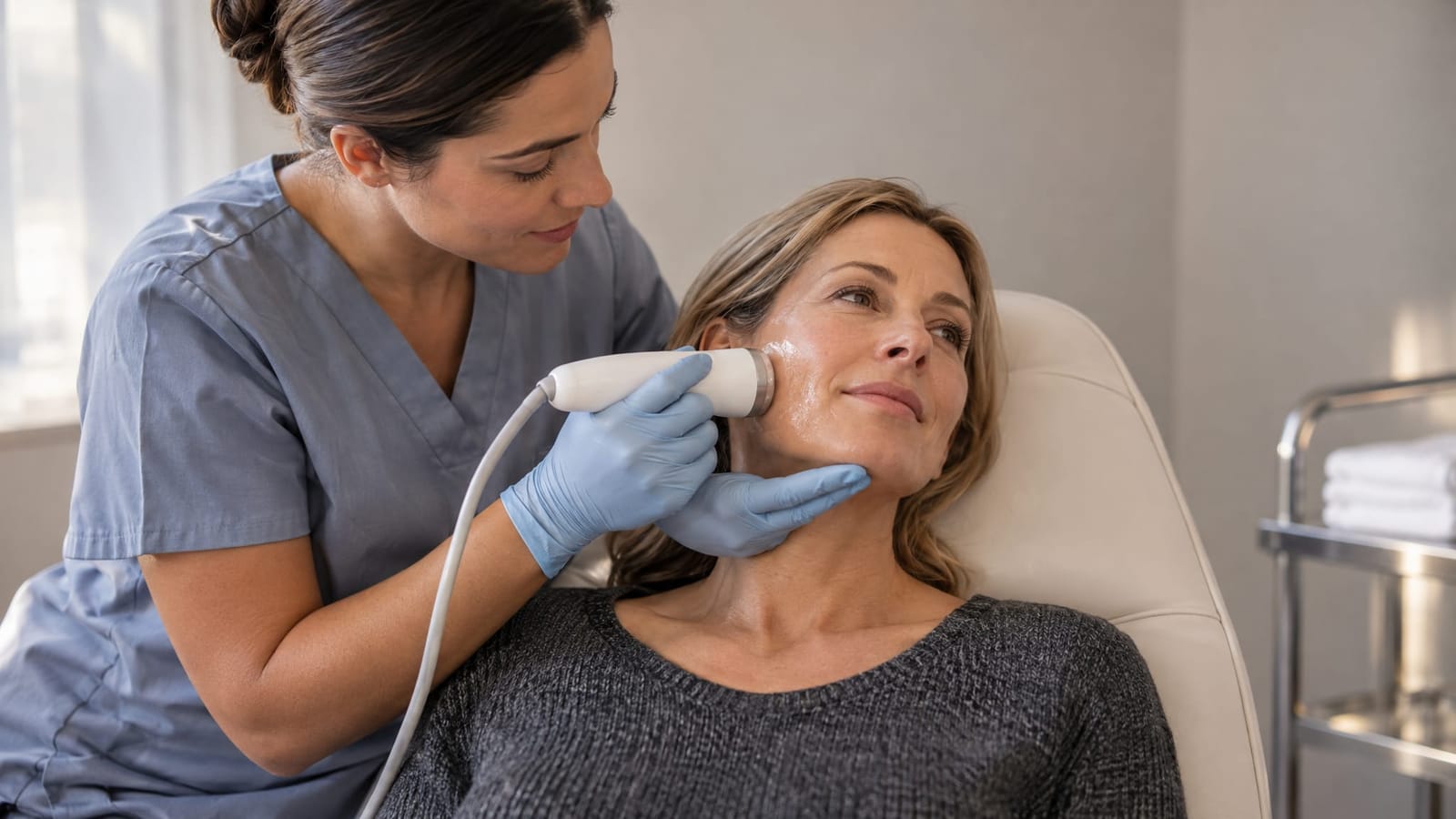
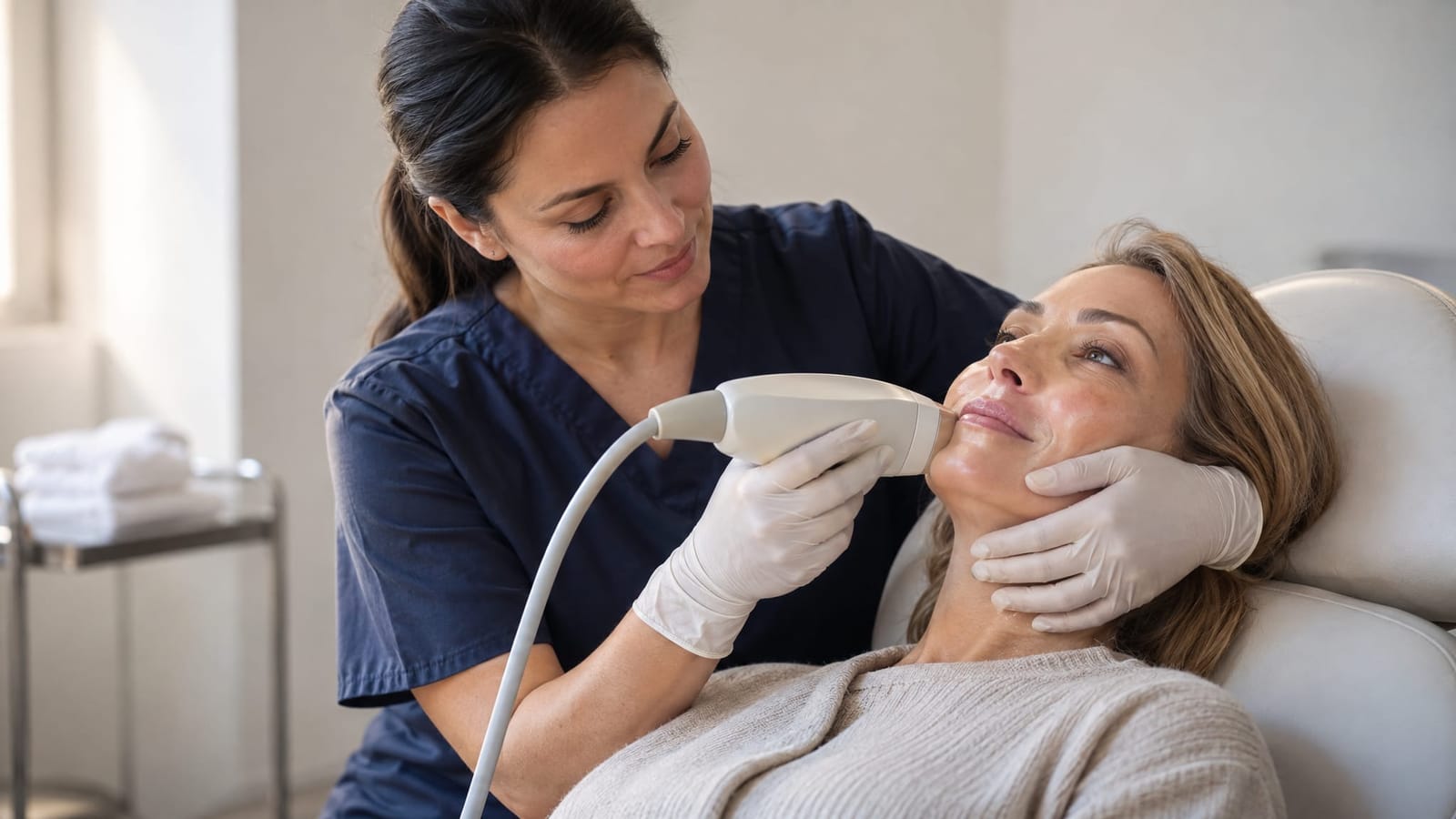
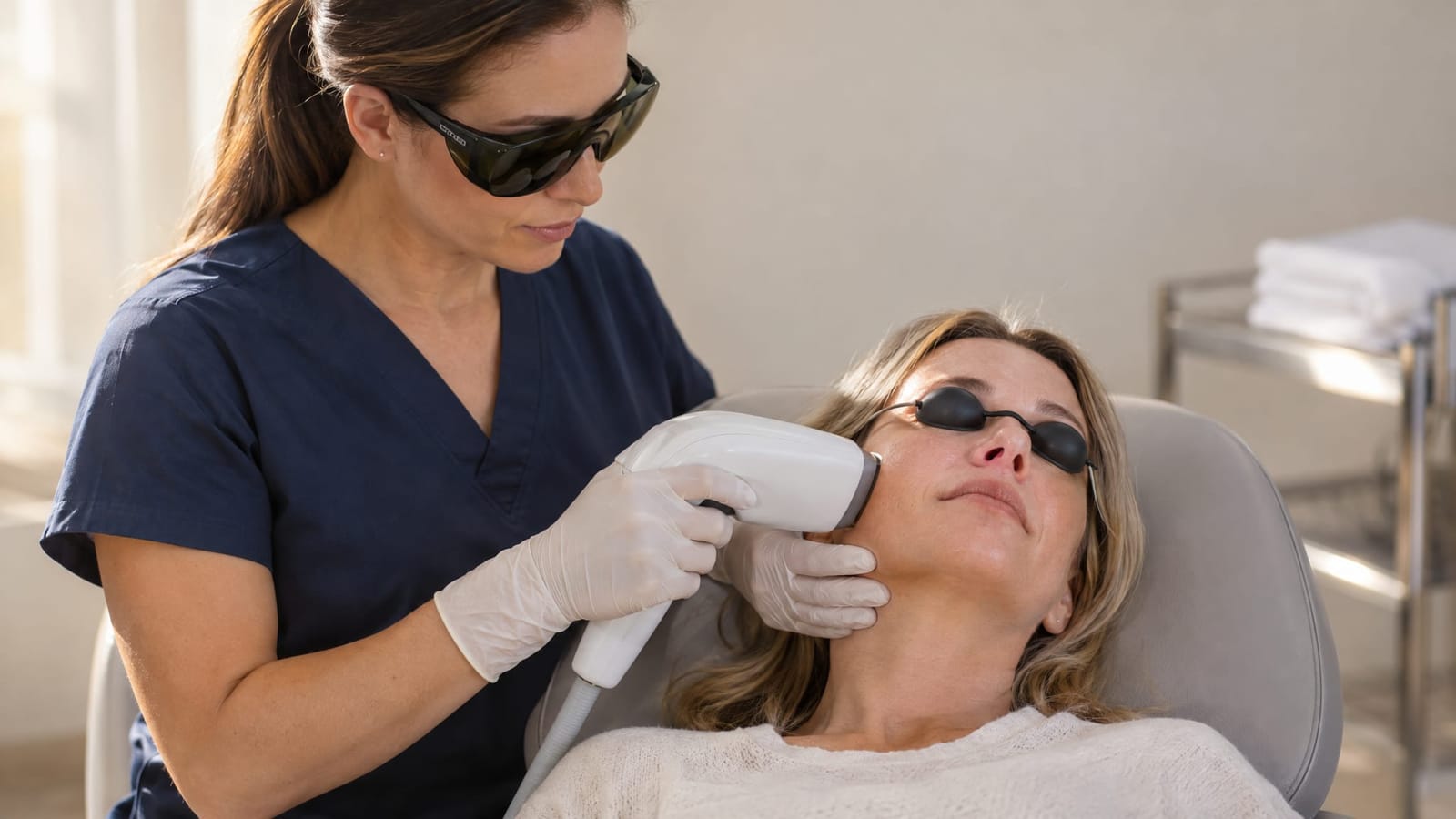
Ablative fractional CO2 lasers deliver more intensive energy, creating microscopic treatment zones that vaporize damaged tissue and drive significant collagen remodeling. For moderate to severe acne scarring, ablative approaches can produce more dramatic structural improvement, but they also involve longer recovery periods, typically ranging from one to two weeks of redness, swelling, and skin peeling. Patients with active skin infections, certain skin tones, or compromised healing capacity may not be appropriate candidates. This is always determined through individual clinical evaluation.
Non-Ablative Fractional Lasers
Non-ablative fractional lasers, such as those using 1550nm or 1927nm wavelengths, work beneath the skin surface without removing the outer skin layer. Recovery is considerably shorter, often three to five days of mild redness and swelling, and the treatment can be repeated across multiple sessions to build cumulative collagen response. These are frequently preferred for patients with milder scarring, or as a maintenance approach following an initial ablative treatment.
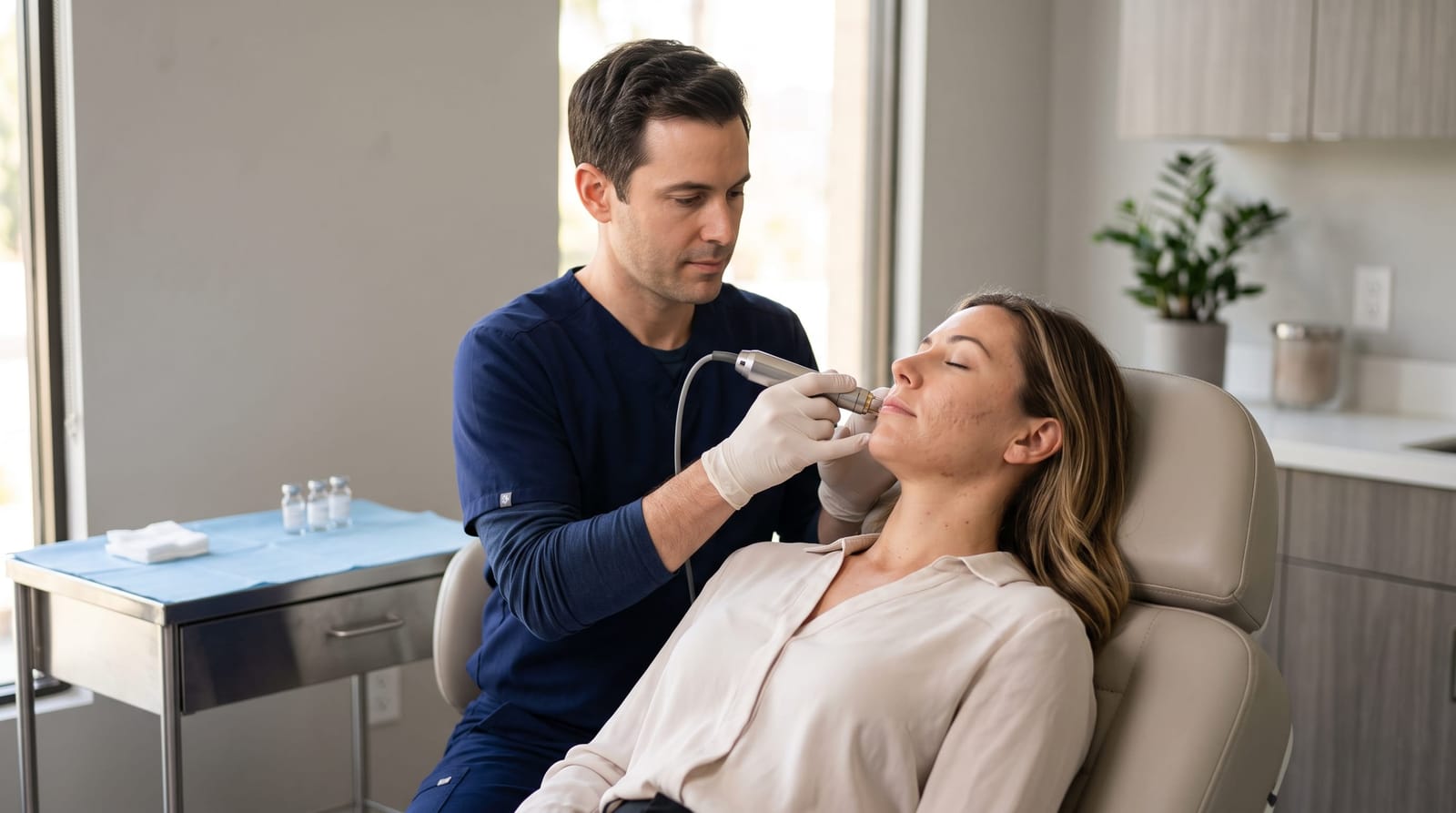
For Maya, her treatment team recommended a staged approach: an initial fractional CO2 session to address her deeper boxcar scars, followed by non-ablative maintenance treatments at three-month intervals. The goal was not to erase the scars entirely, an unrealistic expectation for structural atrophic scarring, but to achieve meaningful visible improvement in texture, depth, and skin uniformity.
Realistic improvement percentages for laser resurfacing vary considerably based on scar severity, skin type, and number of sessions. Clinical literature generally references visible improvement in scar appearance ranging from 25% to 70% or more depending on these variables, though individual results differ, and no specific outcome can be guaranteed. Understanding this range helps patients engage in informed, honest conversations with their provider about what to expect.
Enhancing Results: The Role of Exosome Therapy
One of the more compelling developments in aesthetic medicine is the growing use of exosome therapy as a complement to laser resurfacing. Exosomes are extracellular vesicles, tiny signaling particles derived from stem cells, that carry growth factors, peptides, and messenger molecules believed to support cellular communication and tissue repair processes.
When applied topically following a laser resurfacing treatment, exosomes are introduced to skin that is temporarily more receptive due to the controlled micro-injury created by the laser. The concept is that this pairing may support the skin's natural healing environment more robustly than laser alone: potentially reducing post-procedure inflammation, supporting collagen synthesis, and promoting more even skin renewal. Research in this area is ongoing and evolving, and exosome therapy should be considered a complement to, not a replacement for, a well-designed laser protocol.
At Chara Health, the integration of regenerative adjuncts like exosome therapy into post-laser care reflects a broader philosophy: that thoughtful treatment design, not just the laser itself, drives the most meaningful outcomes. Understanding what to expect during the healing process is an equally important part of that design; you can learn more about skin resurfacing recovery time to prepare appropriately for the days following treatment.
The Chara Protocol: What a Comprehensive Acne Scar Consultation Looks Like
Chara Health approaches acne scar treatment as a clinical puzzle: one that requires understanding the patient's full skin history, scar morphology, lifestyle, and goals before recommending a protocol. A first consultation typically involves:
- Detailed skin assessment: Evaluating scar types, distribution, depth, and skin tone using both clinical examination and, where helpful, imaging tools to assess texture and pigmentation.
- Medical history review: Understanding prior treatments, isotretinoin use (which can affect laser candidacy timing), wound healing history, and current skincare regimen.
- Individualized protocol design: Selecting the most appropriate laser modality, energy parameters, and number of sessions: along with any supportive therapies that may enhance the healing environment.
- Recovery planning: Setting realistic timelines for downtime, sun avoidance, and follow-up care. Patients are educated on what to expect at each stage of healing, including the temporary appearance of redness and peeling that is part of the collagen remodeling process.
- Ongoing evaluation: Reassessing skin response at follow-up appointments and adjusting the protocol accordingly.
For Maya, this process meant six months of intentional treatment and consistent aftercare before she saw her most significant results. By month four post-treatment, her boxcar scars had visibly softened and her overall skin texture had improved substantially in photographs taken under the same lighting conditions as her baseline images. Her icepick scars showed more modest improvement, consistent with their structural depth, and her provider discussed the option of targeted chemical reconstruction as an adjunct for those specific areas in a future phase of care.
Frequently Asked Questions
How many laser resurfacing sessions are typically needed for acne scars?
This varies considerably based on scar severity and the laser modality selected. Some patients with mild to moderate scarring see meaningful improvement over two to three non-ablative fractional sessions. Patients with more significant structural scarring may benefit from a single ablative fractional CO2 treatment followed by non-ablative maintenance sessions. A thorough consultation with a qualified clinician is the most reliable way to get a realistic sense of the treatment course that may be appropriate for your specific concerns.
Is laser resurfacing safe for darker skin tones?
Laser resurfacing can be performed on patients with deeper skin tones, but it requires careful selection of laser wavelength, energy settings, and pre-treatment preparation to reduce the risk of post-inflammatory hyperpigmentation. Non-ablative fractional lasers with longer wavelengths are often preferred for higher Fitzpatrick skin types. Patients with deeper complexions should seek out a provider experienced in treating diverse skin tones and should discuss their skin history in detail before proceeding.
Can laser resurfacing completely eliminate acne scars?
Complete elimination of acne scars, particularly deep icepick or severe boxcar scars, is generally not a realistic expectation from laser resurfacing alone. What most patients can reasonably hope for is meaningful visible improvement: softer texture, reduced scar depth, and more even skin tone. Many patients find that a well-designed treatment plan significantly improves their confidence and the overall appearance of their skin, even if individual scars remain partially visible under certain lighting conditions.
How does exosome therapy fit into a laser resurfacing protocol?
Exosome therapy is used by some practices as a post-laser adjunct, applied topically to skin that has been prepared by the laser treatment to be more receptive to regenerative signaling molecules. The goal is to support the skin's natural healing environment and potentially enhance the collagen remodeling response. This is an evolving area of aesthetic medicine, and exosome therapy is considered a complement to, not a replacement for, the core laser protocol. Ask your provider whether this approach may be appropriate for your treatment plan.
The Bottom Line: Laser Resurfacing for Acne Scars in Los Angeles
For patients like Maya, and the many others across Los Angeles who carry the long-term imprint of past acne, laser resurfacing represents one of the more evidence-supported options available for improving the structural appearance of acne scars. It is not a quick fix, and results are never guaranteed. But with the right scar assessment, the right laser technology, and a thoughtful protocol that may include regenerative adjuncts like exosome therapy, many patients experience improvements that feel genuinely transformative. As part of Chara Health's broader approach to non-invasive facial rejuvenation, acne scar treatment is always designed around the individual: your skin, your history, and your goals. A consultation is the best next step toward understanding what may be possible for you.